Round vs. Rectangular Dining Table: Which Shape Works Better?
Compare round and rectangular dining tables by room shape, seat count, and traffic flow.
Round tables
A round dining table is easy to walk around, which makes it a good fit for small rooms and open kitchens. It also encourages conversation because everyone faces the center. A 48-inch round table usually seats four; a 60-inch round table can seat six.
The trade-off is wall placement. A round table needs clearance on all sides, so it is less efficient in a narrow room. If the table sits against a wall, a rectangular shape usually uses the space better.
Rectangular tables
A rectangular table is the most efficient shape for a long room and a wall. It lines up with walls, windows, and kitchen islands, and it seats more people per square foot. A 60- to 72-inch rectangular table is a common six-seat size.
The downside is corners. In a tight room, a rectangular table can make the walkway feel narrower. Measure the path behind the chairs before you commit.
Oval tables
An oval table is a compromise: it has the seat count of a rectangular table but softer edges. It works well in a room with a bay window or a curved seating area.
How to decide
- Narrow room, table against a wall: rectangular.
- Small square room, open on all sides: round.
- Open-plan kitchen with a walkway: round or oval.
- Large family, tight budget: rectangular.
- Conversation-focused dinners: round or oval.
Chair placement
Leave at least 24 inches of table width per person. For a round table, divide the circumference by the number of seats. For a rectangular table, measure the long side and subtract the ends if you do not seat people there.
Pieces that fit this advice.
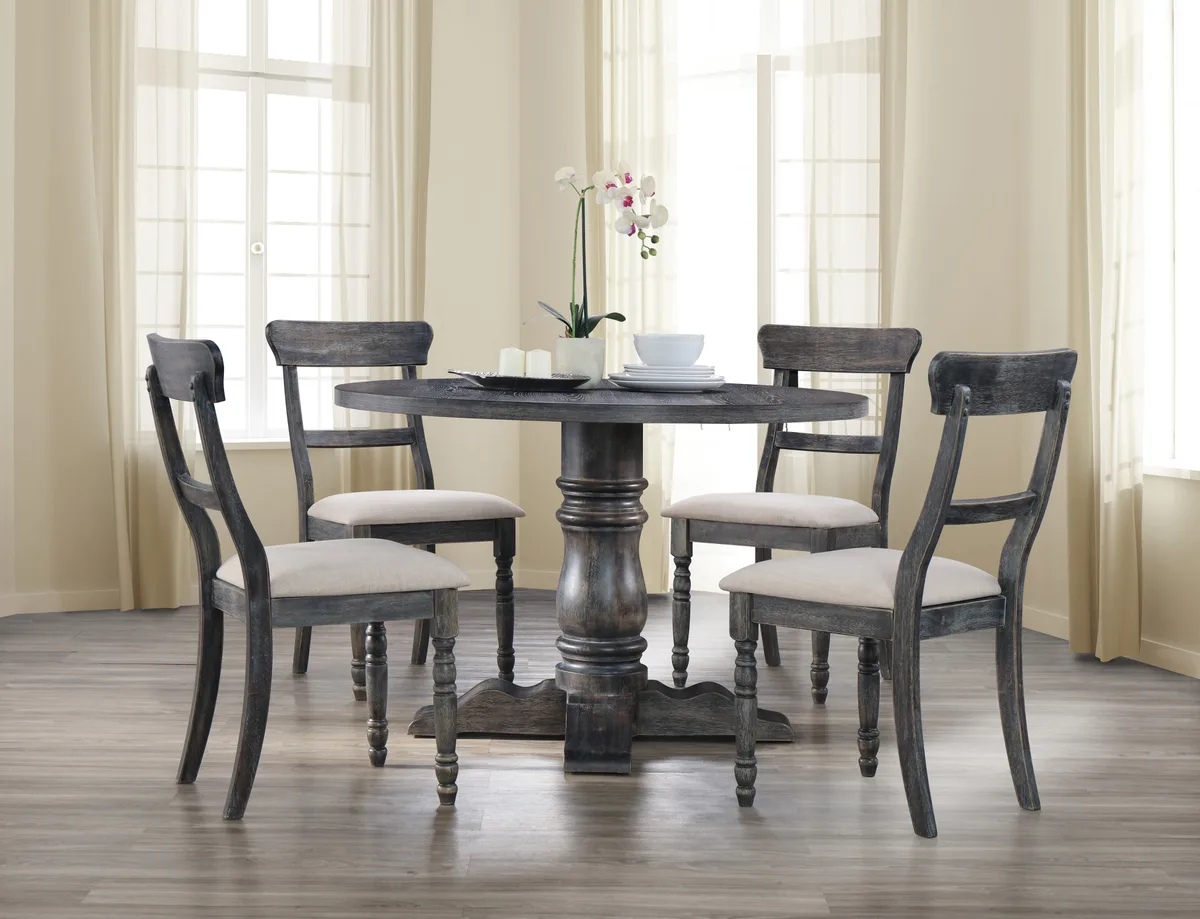 Rustic
Leventis Dining Table in Weathered Gray 74640
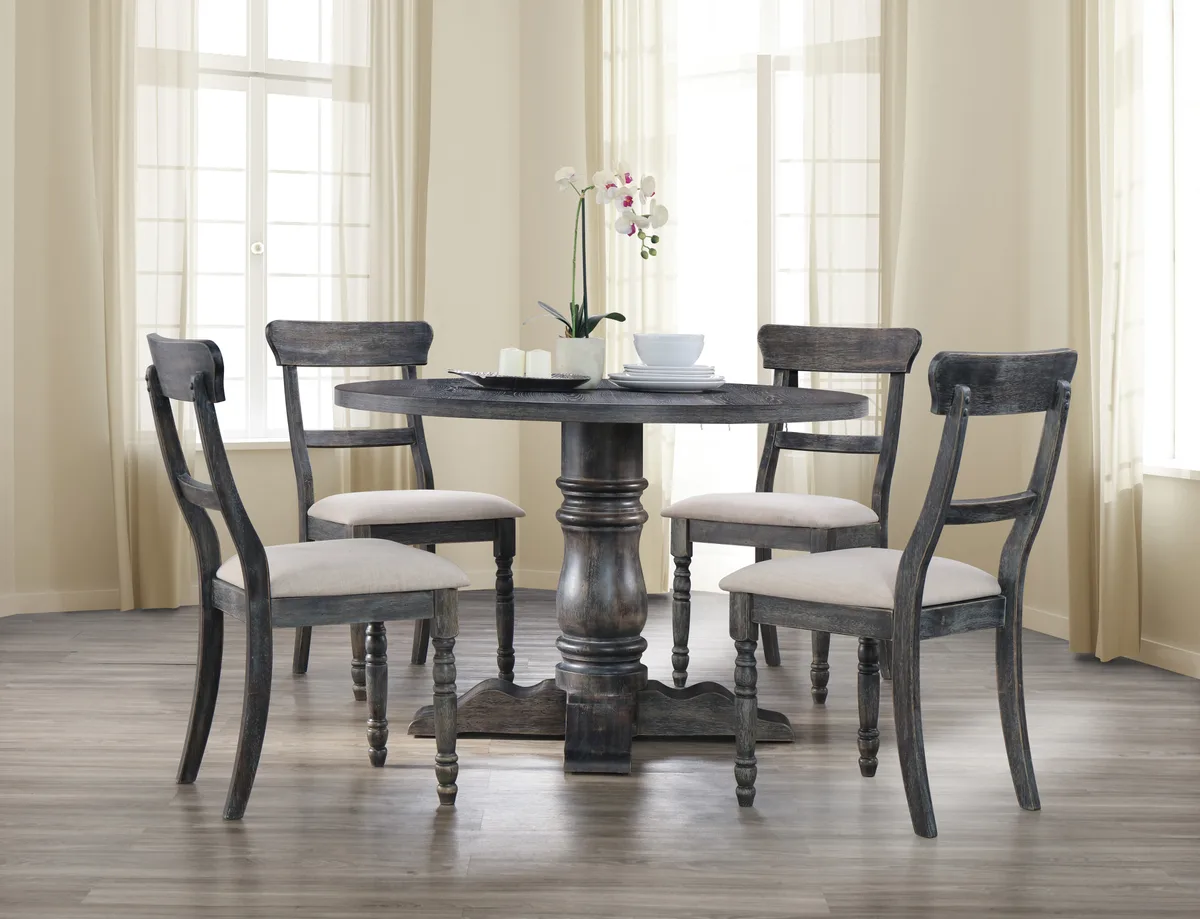 Rustic
Leventis Dining Table in Weathered Gray 74640
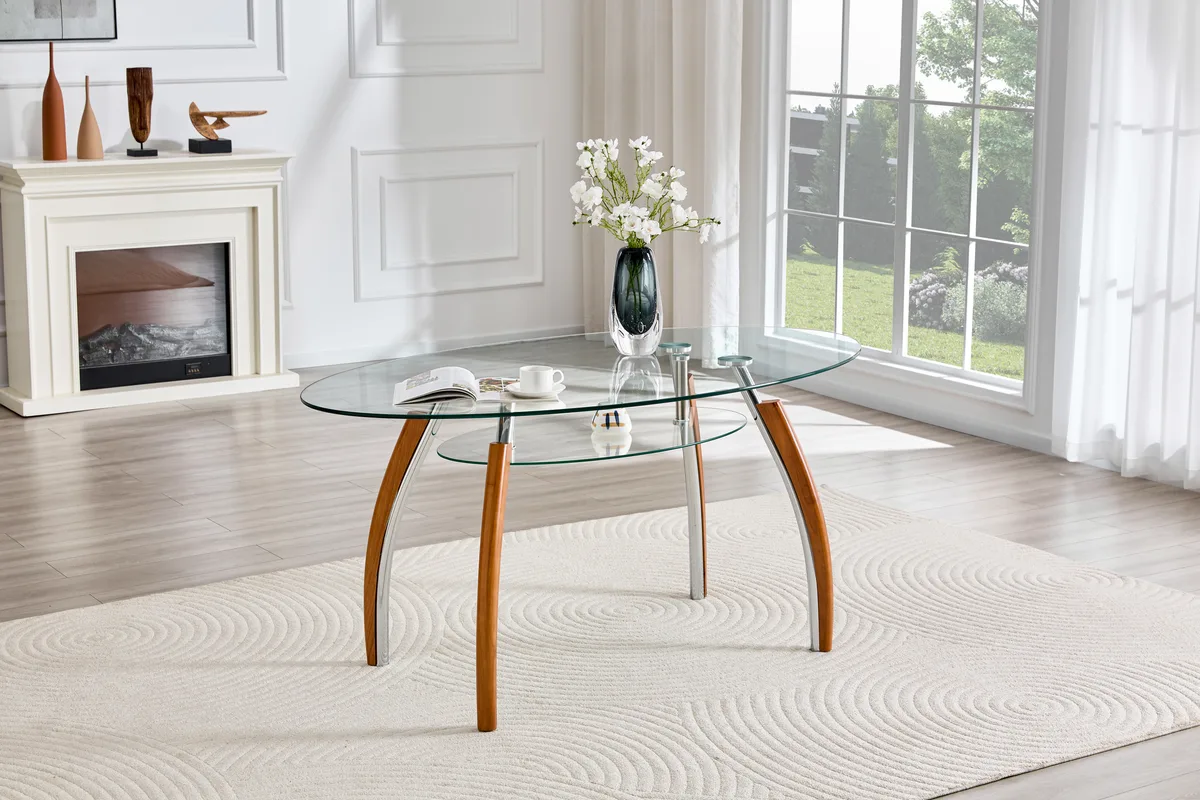 Modern
Mid - Century Modern Oval Glass Dining Table with Oak Wood Legs, Seats 6
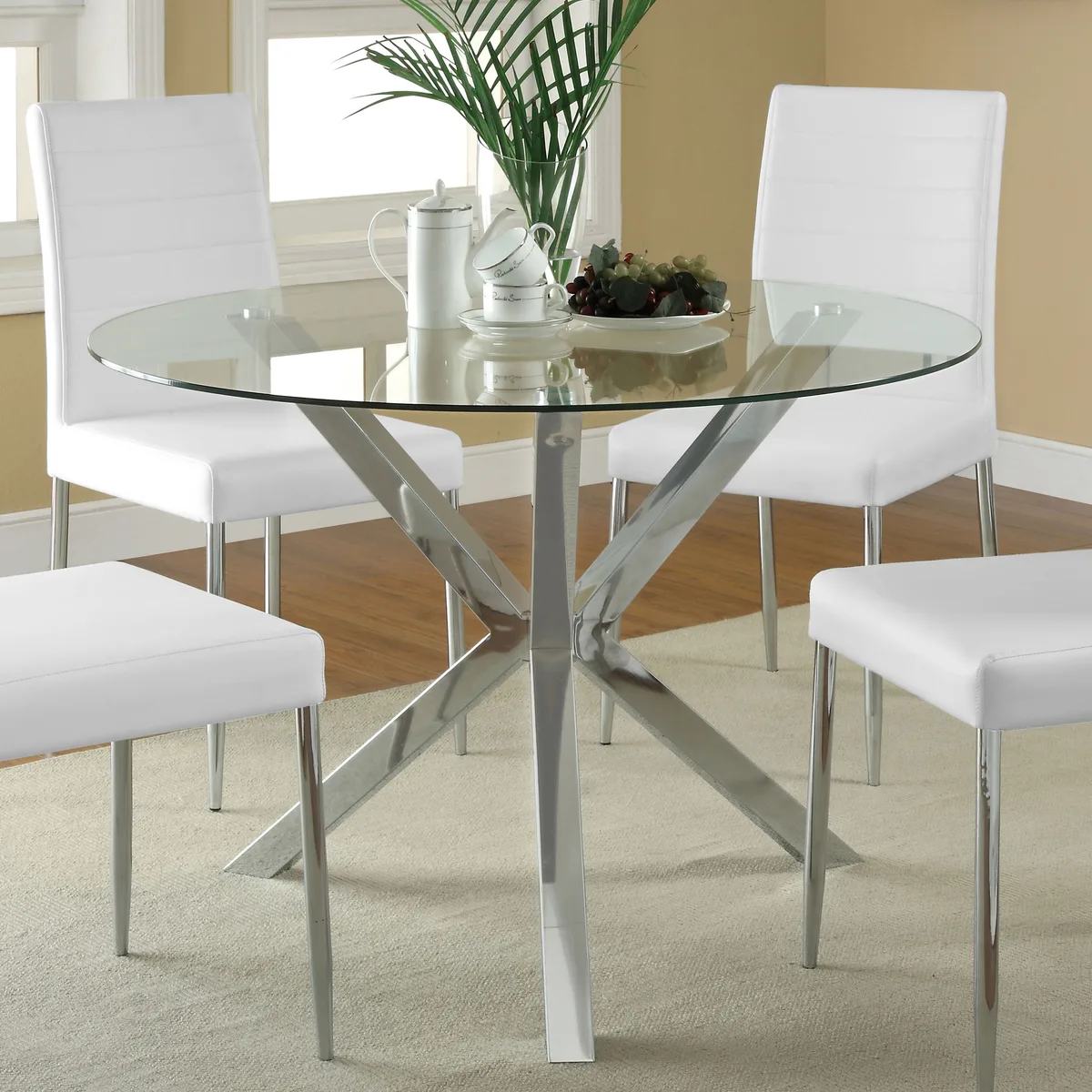 Contemporary
Chrome Round Dining Table, 41 Inch Glass Top, Contemporary Seats 4
Related guides.
Dining Table Size Guide: How Many People Will It Seat?
Choose a dining table size by seat count, room clearance, and chair width.
Read the guide →How to Measure Your Space Before Buying Furniture
A simple measuring checklist for furniture: floor space, doorways, walkways, and chair clearance.
Read the guide →