Furniture Material Guide: Solid Wood vs. MDF vs. Veneer
Compare solid wood, MDF, veneer, metal, and glass furniture by durability, cost, and care.
Solid wood
Solid wood is cut from one piece of timber. It is durable, can be sanded and refinished, and develops character over time. It is also heavier and more expensive, and it can expand or contract with humidity.
Best for: dining tables, nightstands, and pieces you plan to keep for years.
MDF
MDF is engineered wood made from wood fibers and resin. It is uniform, stable, and less expensive than solid wood. It does not have grain, and it can swell if water gets into an exposed edge.
Best for: painted furniture, budget-friendly pieces, and stable panels.
Veneer
Veneer is a thin layer of real wood over a stable core. It gives the look of wood at a lower cost and is less likely to warp than solid wood. It can be damaged by moisture and cannot be sanded as aggressively.
Best for: bookcases, sideboards, and large panels where stability matters.
Metal
Metal frames are strong and easy to wipe. They can be powder-coated or plated. Look for a stable base and a finish that resists scratches. Metal can feel cold in a bedroom, but it works well in living rooms and dining areas.
Glass
Glass tops are easy to clean and make a room feel lighter. They show dust and fingerprints, and they need a sturdy frame. Tempered glass is the safer choice for furniture.
How to choose
- Daily-use dining table: solid wood or a well-built veneer.
- Painted nightstand: MDF is often enough.
- Living room coffee table: solid wood, veneer, or glass with a metal base.
- Budget piece: MDF or veneer, as long as the hardware and frame are solid.
Check the care label and the weight rating before you buy. A material is only as good as the construction around it.
Pieces that fit this advice.
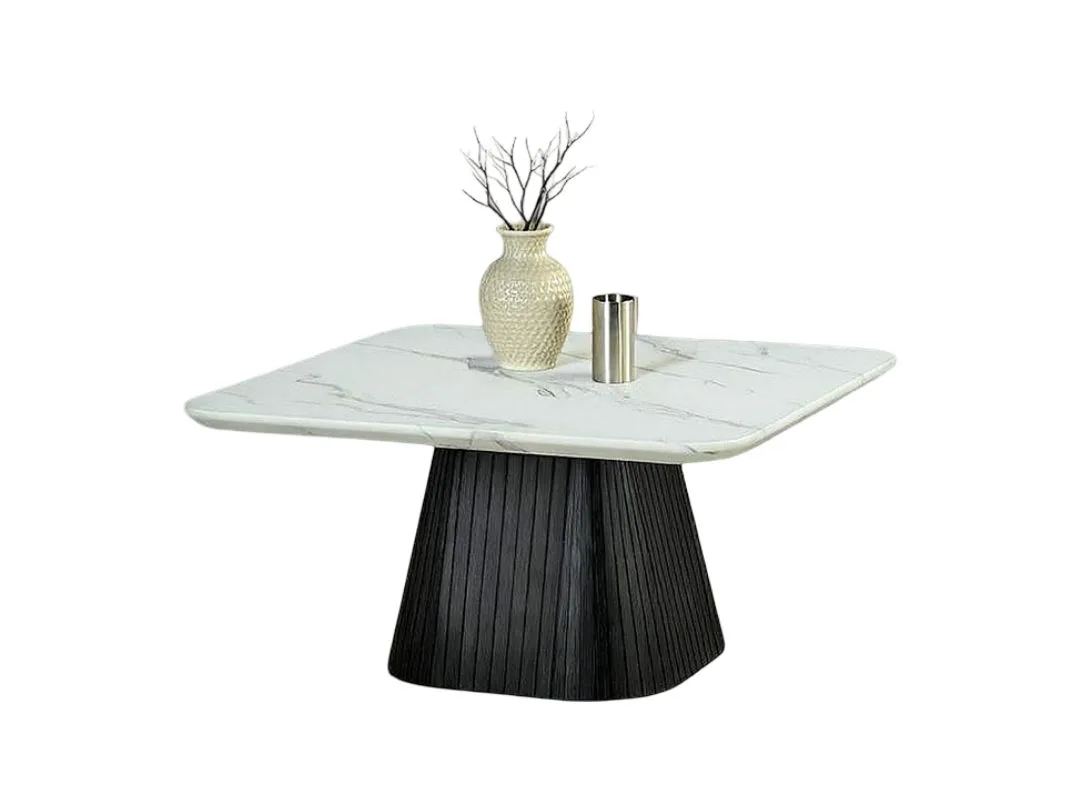 Contemporary
 Style Square Coffee Table Faux Marble Top Reeded Drum Base Black
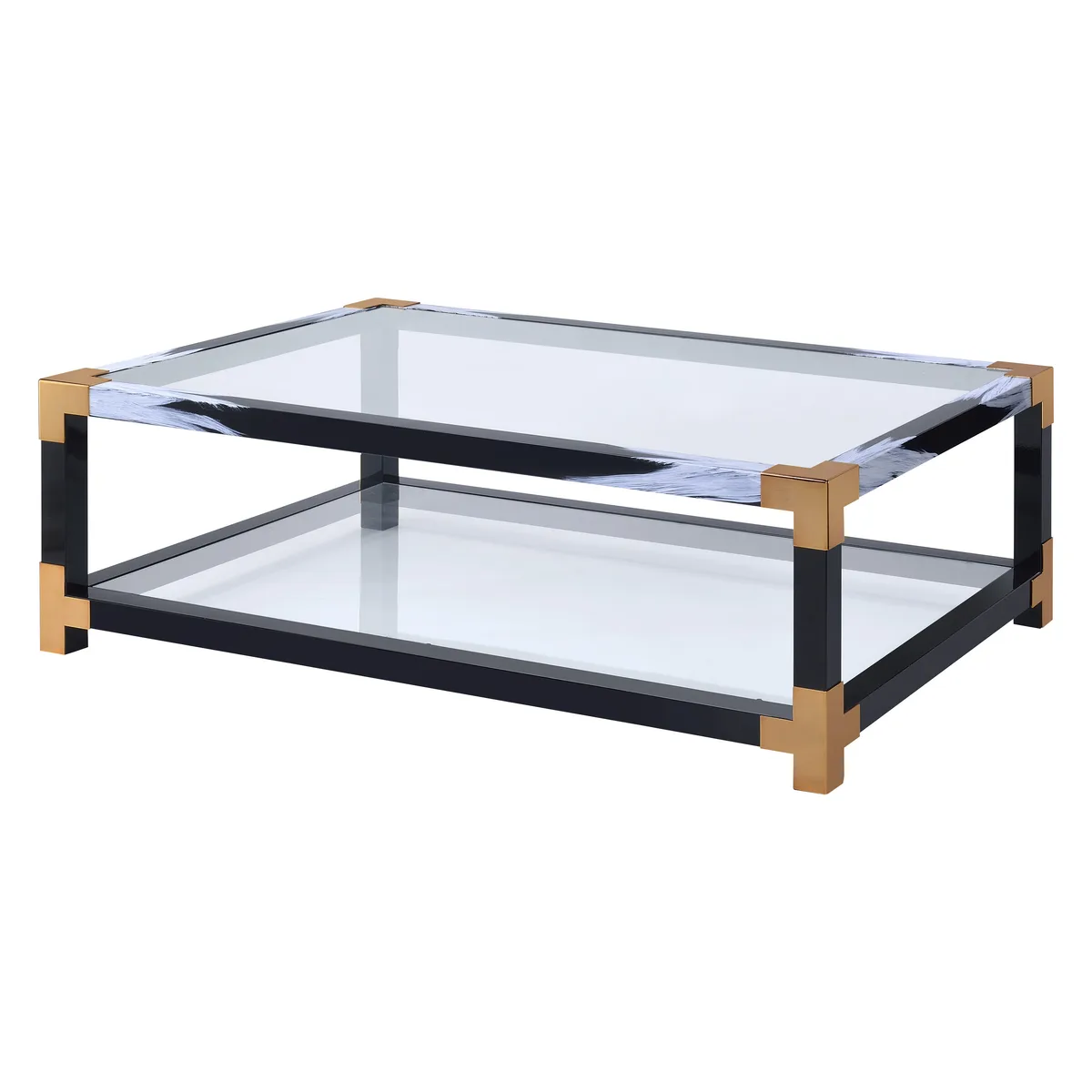 Modern
Lafty Coffee Table in White Brushed & Clear Glass 81000
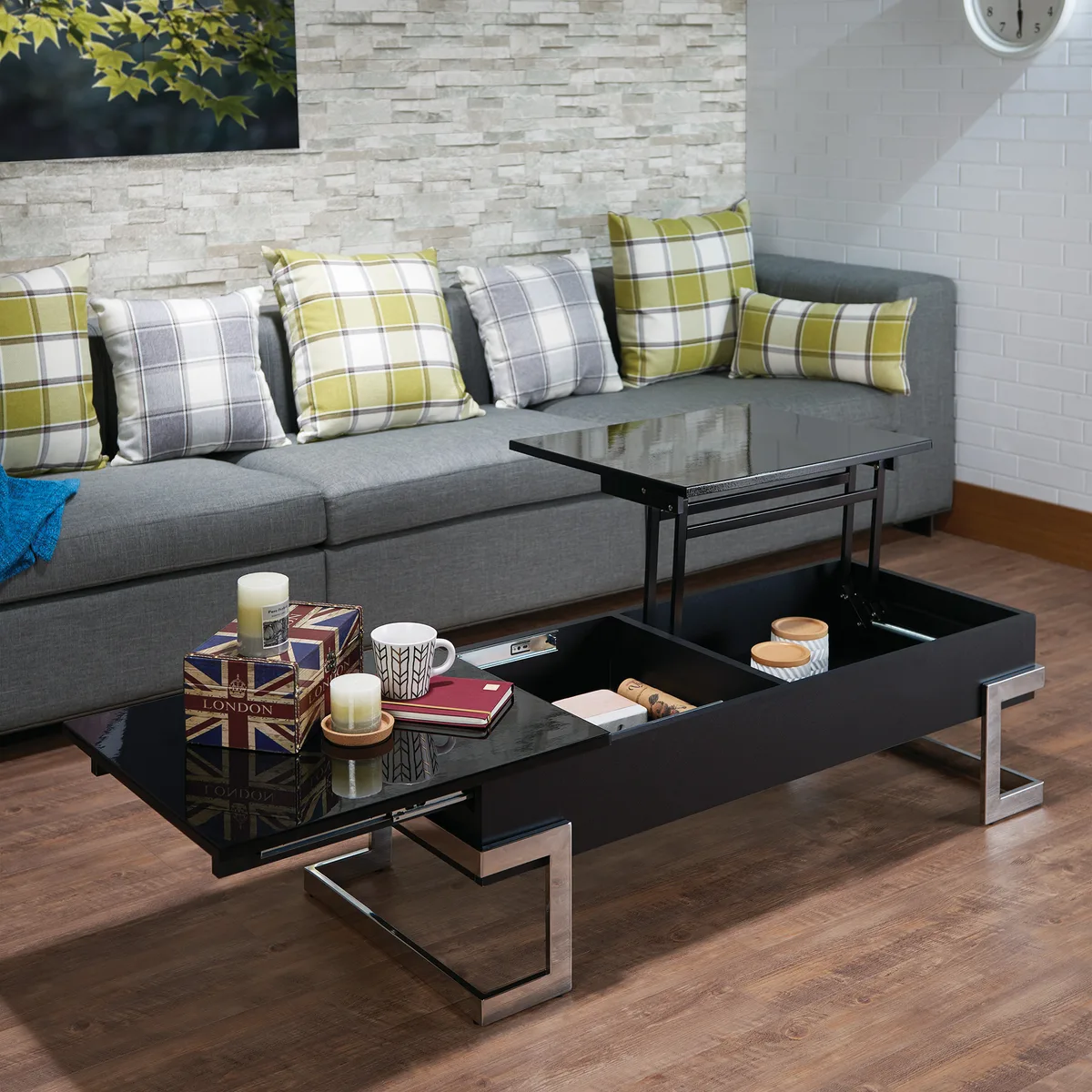 Modern
Calnan Coffee Table in Black & Chrome 81855
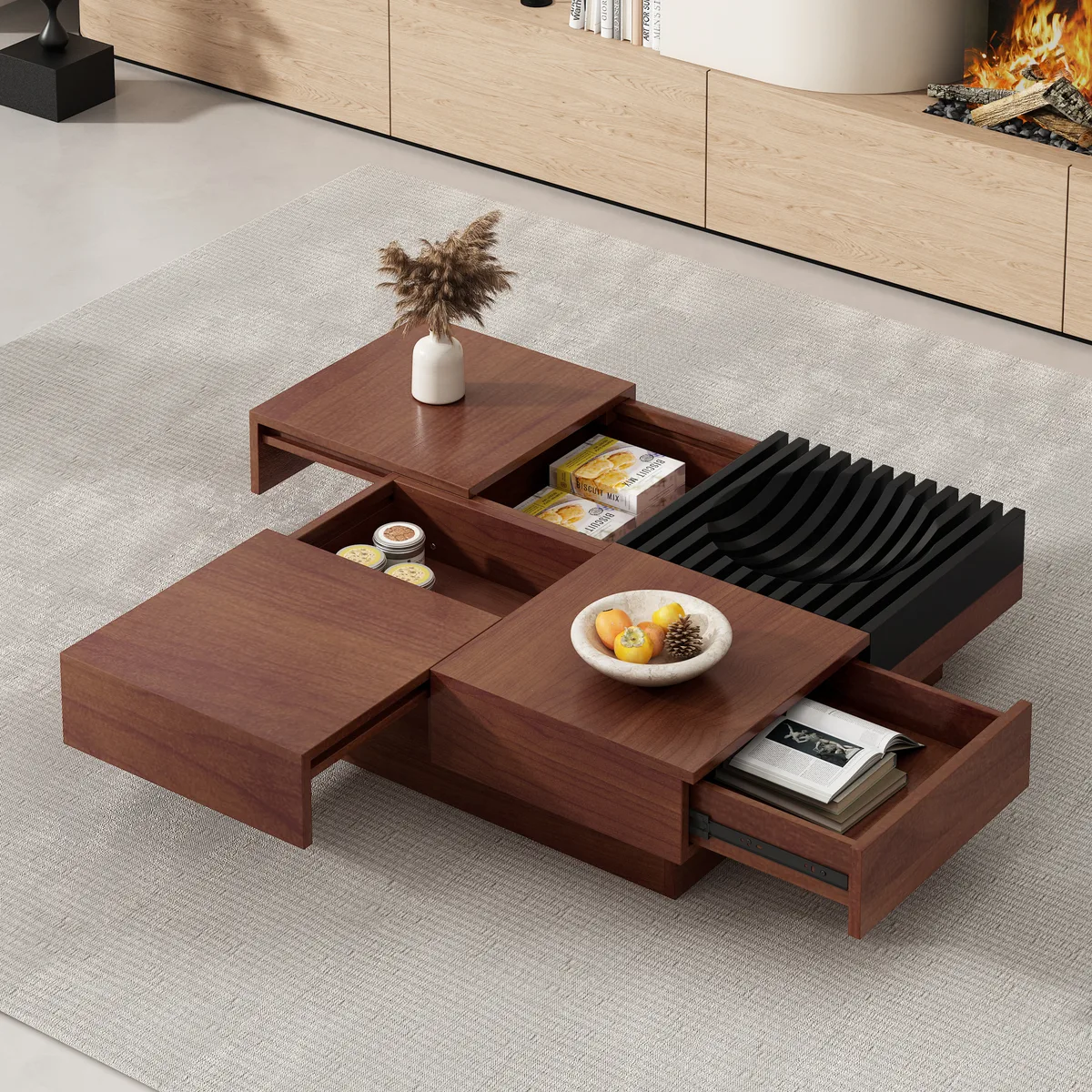 Modern
Italian Retro - Inspired Acacia Wood Storage Coffee Table,Brown & Black Color
Related guides.
Coffee Table Size Guide: How to Choose the Right Size
Use sofa length, walkway clearance, and table height to choose a coffee table that fits your living room.
Read the guide →Round vs. Rectangular Coffee Table: Which Fits Your Living Room?
Compare round and rectangular coffee tables by room shape, walkway, seating, and styling.
Read the guide →