Entryway Storage Guide: Shoe Cabinets, Benches, and Consoles
Plan a small entryway with closed shoe storage, a landing surface, and a place to sit.
The three jobs of an entryway
An entryway needs a place to put things down, a place to sit, and a place to hide shoes. You do not need a large space to do all three, but you do need to measure before you buy.
Start with the walkway
Leave at least 36 inches of clear floor in front of the door if possible. In a narrow hallway, a shallow console or a wall-mounted shelf may work better than a deep cabinet. Measure the door swing first.
Shoe storage
A shoe cabinet is the most efficient way to hide shoes, but check the interior depth. A 12-inch-deep cabinet works for most flat shoes; boots need more. If the cabinet is tall, anchor it to the wall.
A place to sit
A bench gives you a place to put on shoes and can double as storage if it has a lift-top or a lower shelf. Keep the bench shallow enough that it does not block the door.
A landing surface
A console or a small shelf gives you a place for keys and mail. A tray keeps small items together. If the entryway is very narrow, a wall hook and a small shelf can replace a console.
Light and mirror
A mirror above the console or bench brightens the space and gives you a last look before you leave. If there is no natural light, add a small lamp or a wall sconce.
A simple layout
- One closed shoe cabinet
- One bench or stool
- One narrow console or shelf
- One mirror
- One tray for keys
That is enough for most entryways. Add more only if the walkway stays clear.
Pieces that fit this advice.
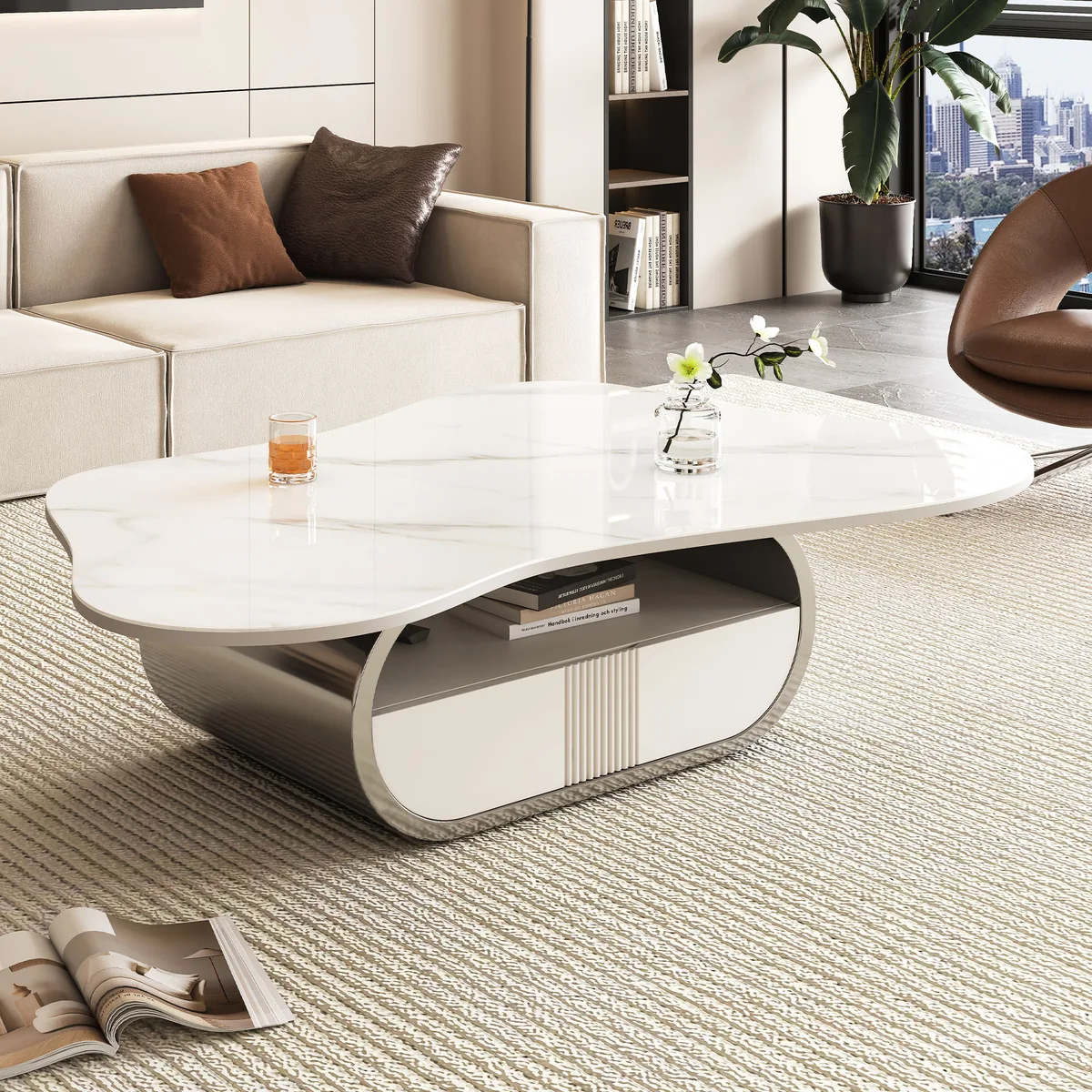 Modern
 Butterfly Coffee Table with Sintered Stone Top – Oval Center Table with
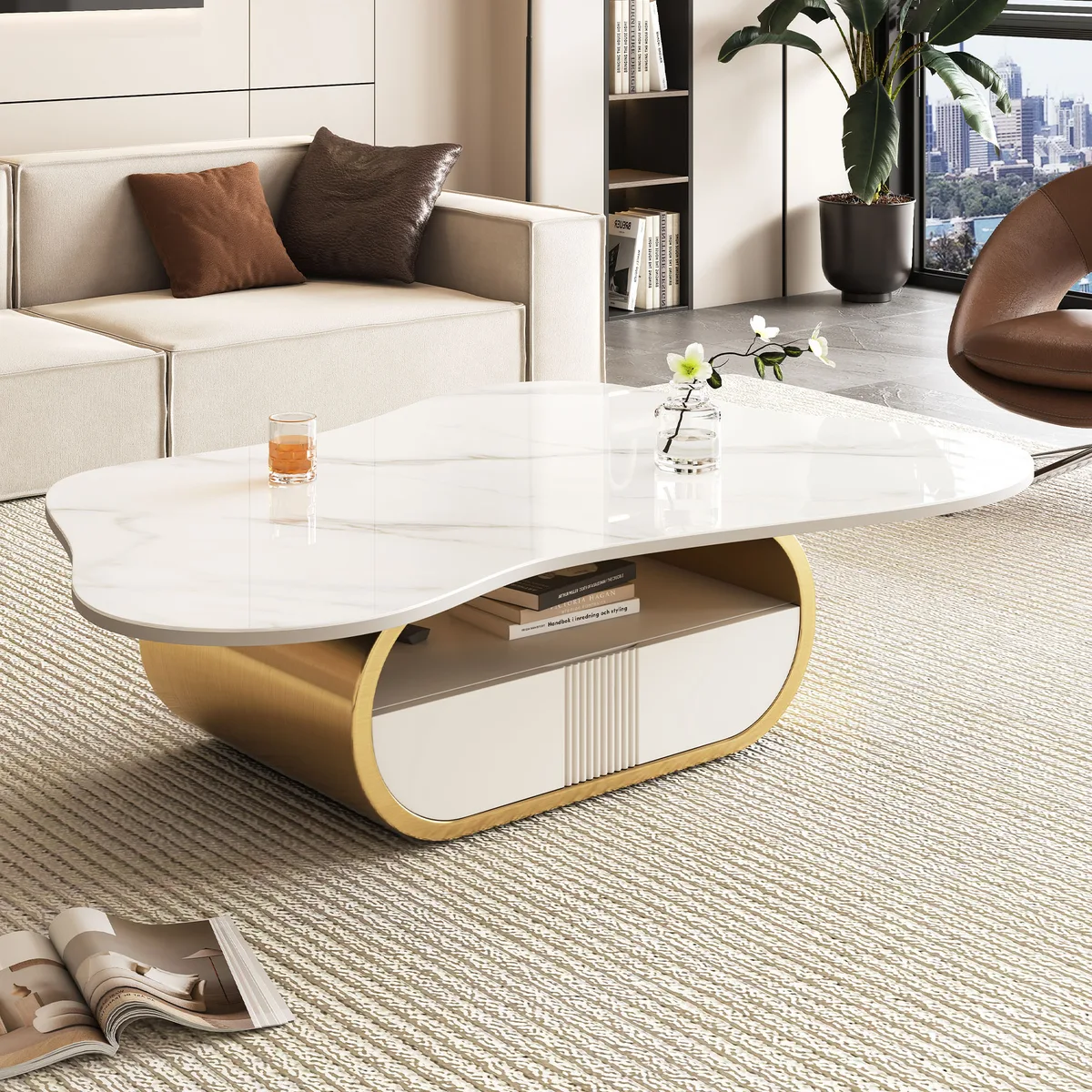 Modern
 Butterfly Coffee Table with Sintered Stone Top – Oval Center Table with
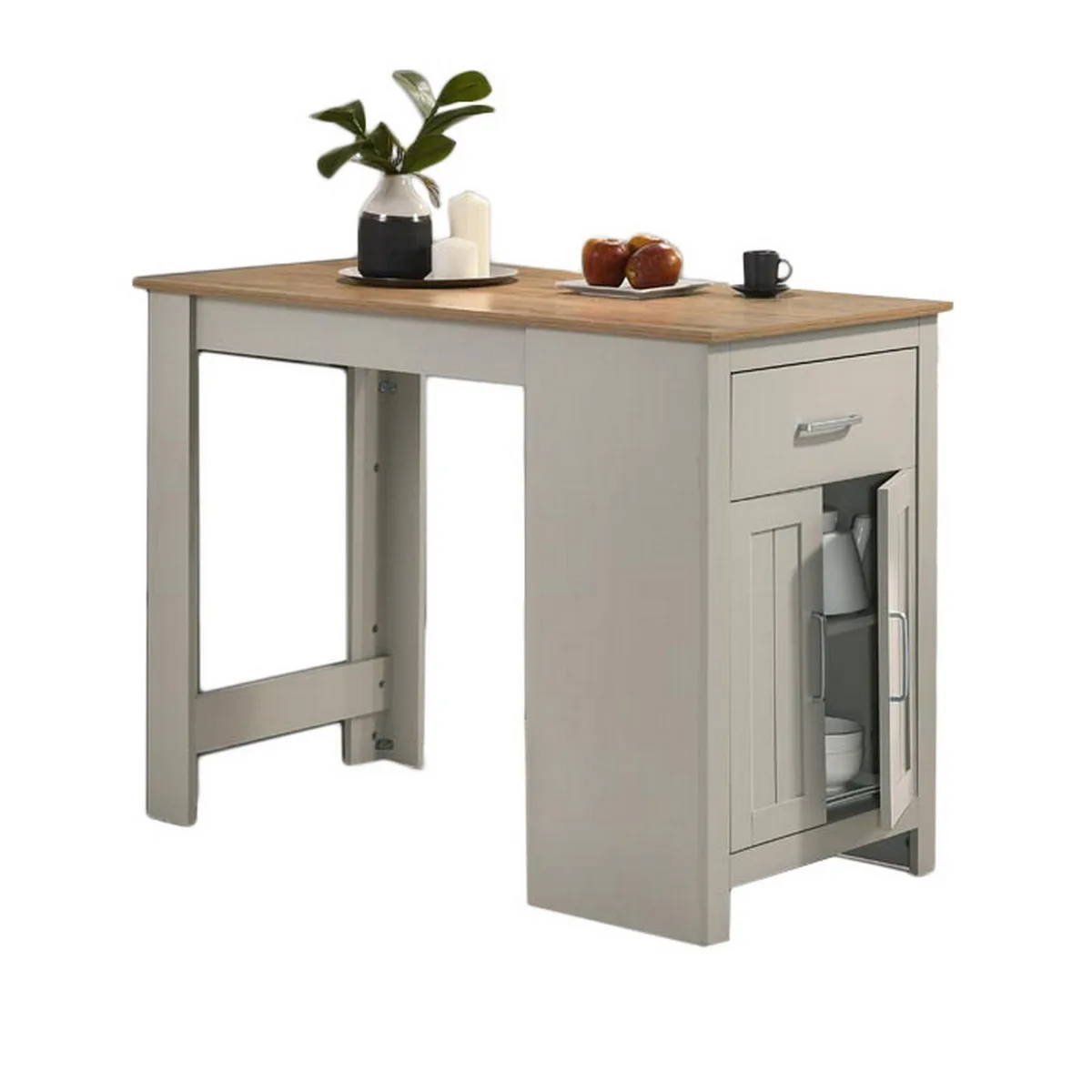 Modern
Brown Counter Height Dining Table with Storage Cabinet and Drawer, 47 Inch
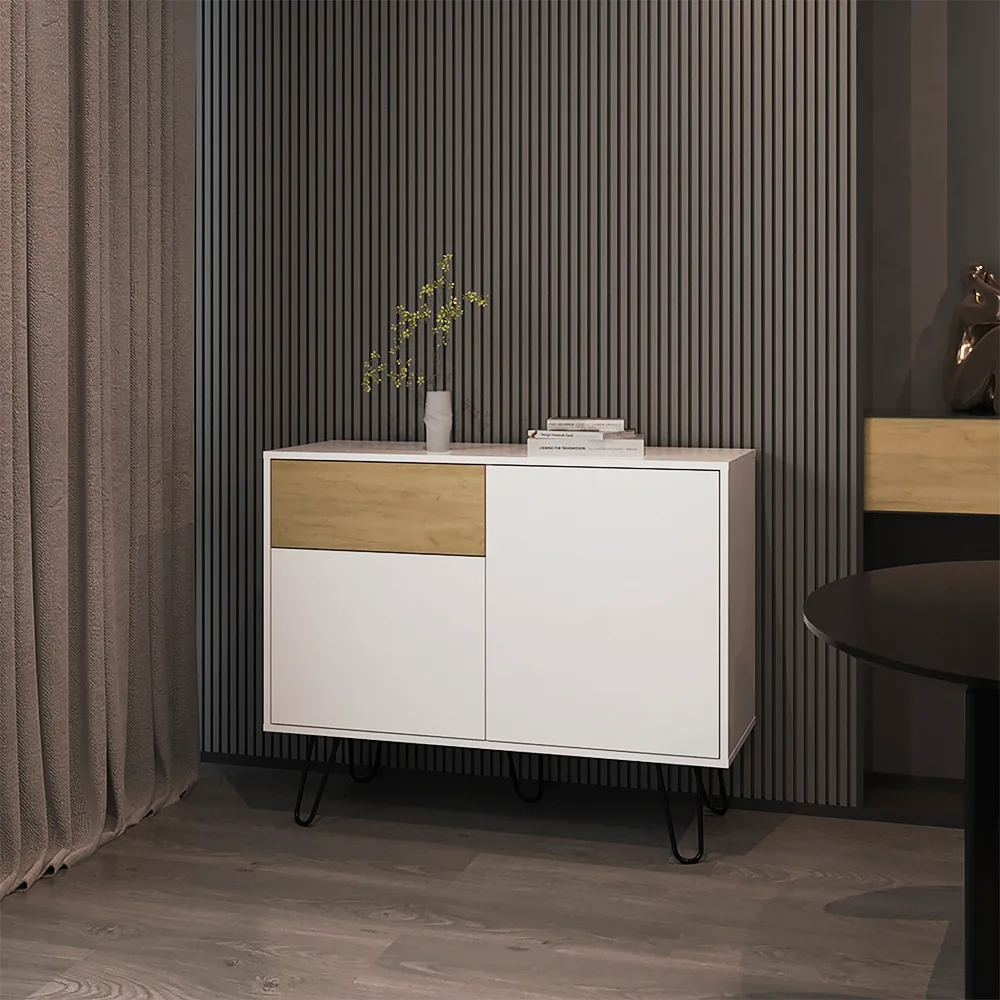 Modern
Platea Sideboard, Living Room, White/Macadamia
Related guides.
Narrow Console Table Guide: Sizes for Hallways and Entryways
How to choose a narrow console table by depth, height, and walkway clearance.
Read the guide →Console Table Styling: 6 Ideas for Entryways and Living Rooms
Simple console table styling ideas using trays, lamps, mirrors, and negative space.
Read the guide →